

Waterline dig at downtown intersection unearths century-old history
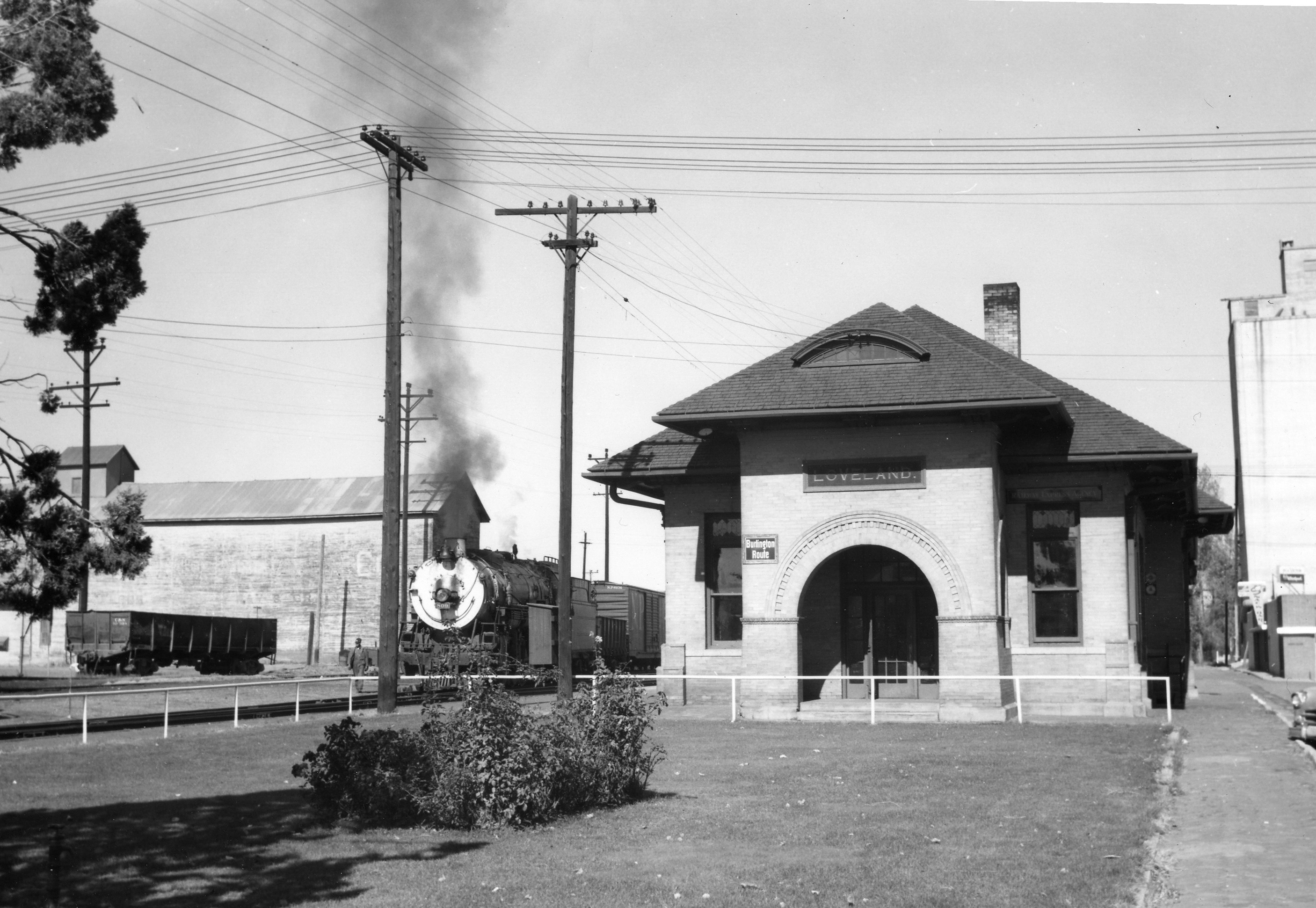
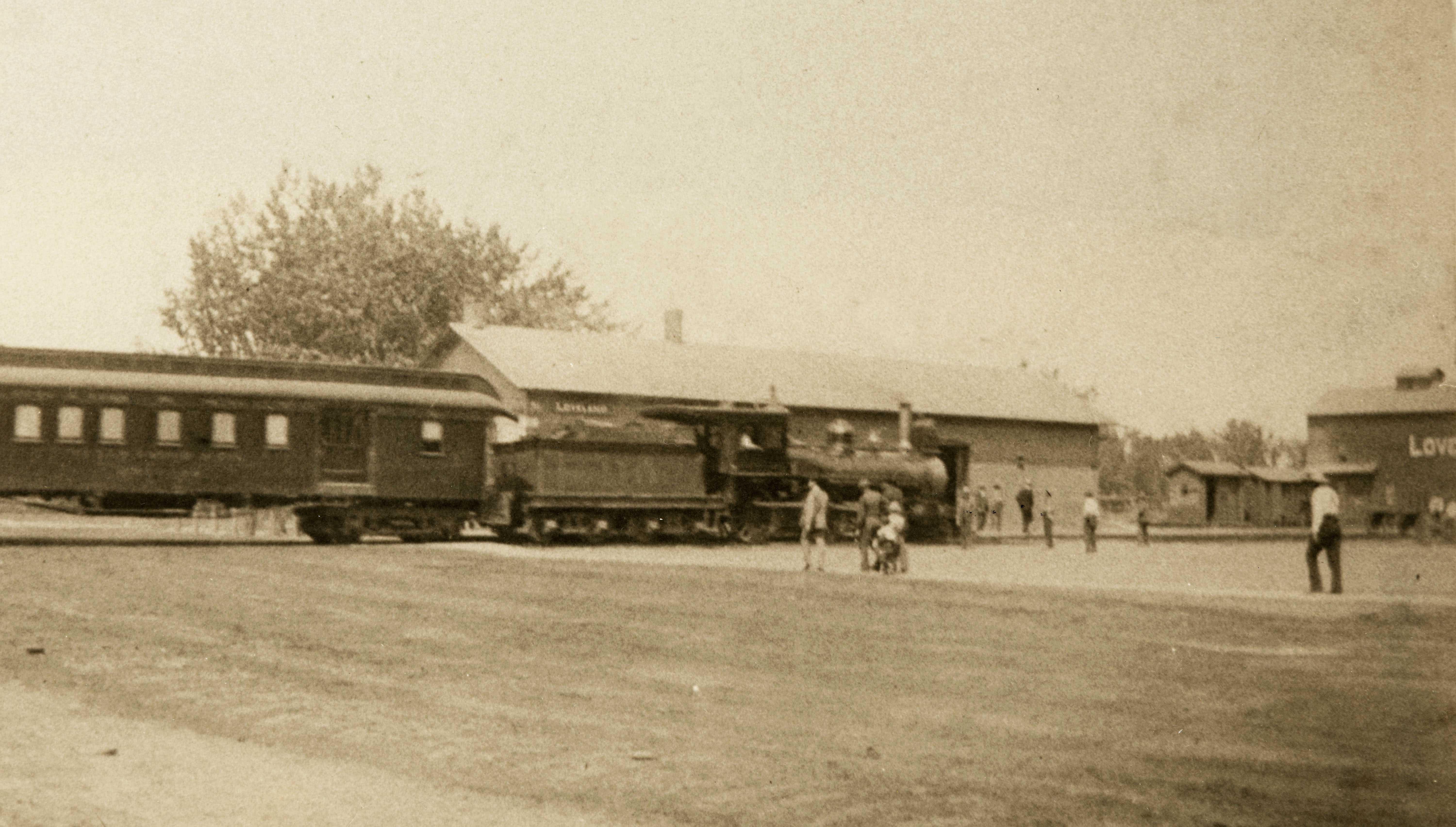 Caption: A train pulls into the Main Depot at the intersection of Railroad Avenue and 4th Street in Loveland, Colorado, circa early 1900s. Photo courtesy Loveland Museum Collection.When the train rolled through Loveland in the early 1900’s, an important stop was the main railway depot at the intersection of Railroad Avenue and 4th Street. There, on a side track along the adjacent Loveland Feed & Grain Mill, workers would load railcars with wheat and flour to ship across the country.
At the time, Loveland was a booming agricultural hub in northern Colorado, and laborers came alone or with their families from all parts of the country to plant and harvest crops like wheat, beets and cherries. Many stayed to call Loveland home, contributing to the town’s expansion.
As Loveland grew, so too did the need for water.
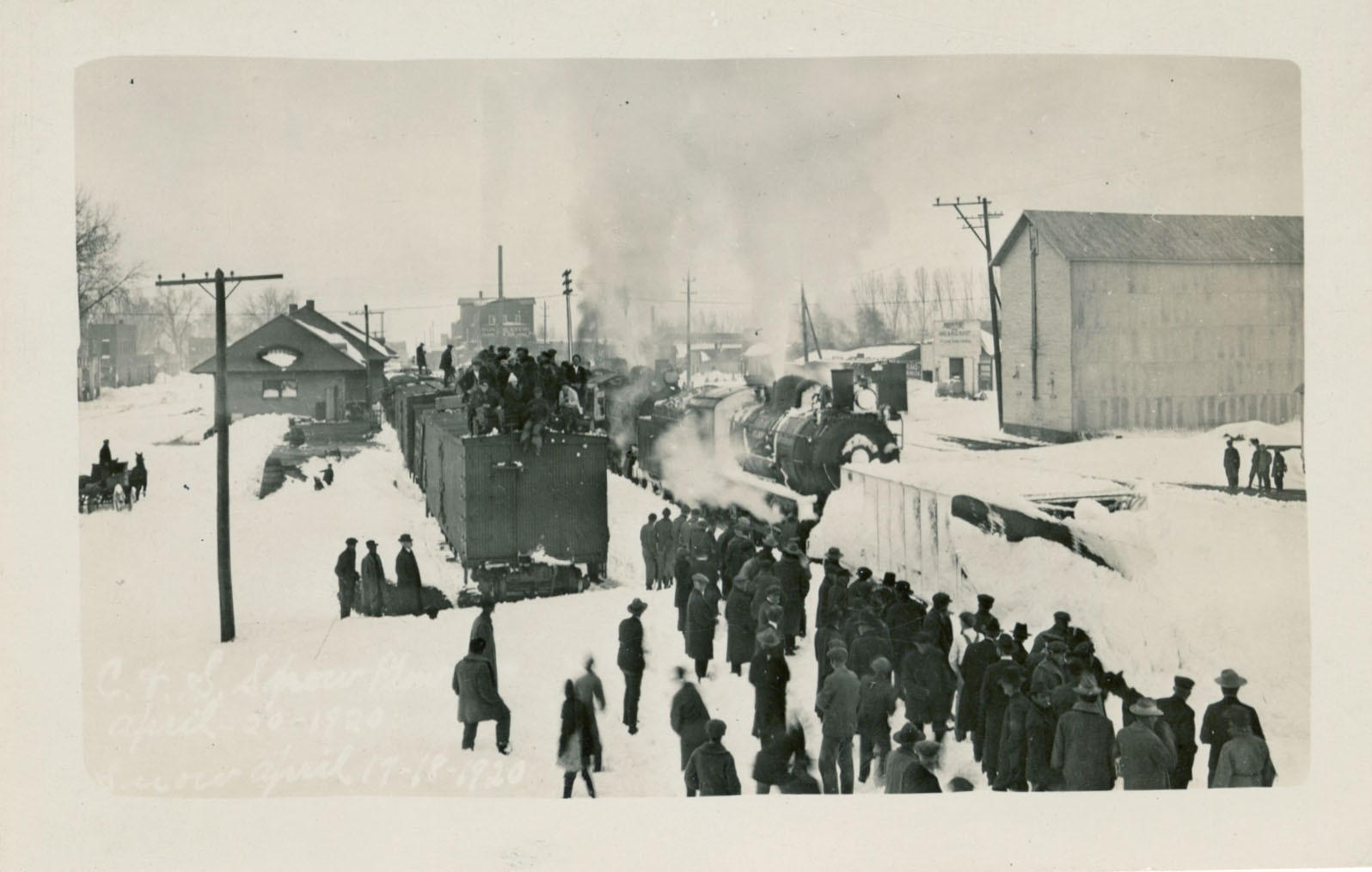 Caption: 1920 winter snow scene of people gathered by train cars at the Main Depot at the intersection of Railroad and 4th in Loveland, Colorado. Photo courtesy Loveland Museum Collection.
Out with the old. In with the new.
Beginning in February 2026, City of Loveland Utilities will replace a century-old, 10-inch, cast-iron water pipe beneath the tracks at Railroad and 4th with a new 12-inch PVC pipe, set within a larger steel casing for protection. The older pipe, buried a mere four feet below and across the railway tracks, has supplied water to the residents and businesses of Fourth Street since 1924—from serving a population of around 5,600 to 85,000 people today.
“Our water distribution system is like a grid, with multiple points of connections going in different directions,” said Donald Cecil, city engineer with the Utilities Department and project lead. “The new pipe maintains a critical point in the line so that water can continue to flow through downtown from east to west. Resilient and built to last, the pipe will bring increased capacity and pressure and improved quality to the community’s drinking water.”
He added that the advantage of a grid system is that if there is a leak on a specific section of water main, then Utilities crew can isolate that section and serve surrounding areas from another direction.
The construction is part of an ambitious downtown renovation project called the 4th Street Revitalization Project, the first phase of the comprehensive Heart Improvement Plan (HIP Streets) that centers on upgrading and improving deteriorating infrastructure such as utilities, roads and sidewalks in the “heart” of downtown Loveland.
The waterline work at Railroad and 4th is unique because it involves boring pipe underneath an operating railroad track with many different entities involved including city, state and even federal agencies, including Utilities, Public Works, the Downtown Development Authority and Burlington Northern Santa Fe (BNSF) Railway, the owner of the railroad.
“The project is complex because each entity has a different set of criteria that must be met,” said Cecil. “Above all, we want to ensure that our construction agreements support railway operations and safety, and this brings layers of coordination and precaution.”
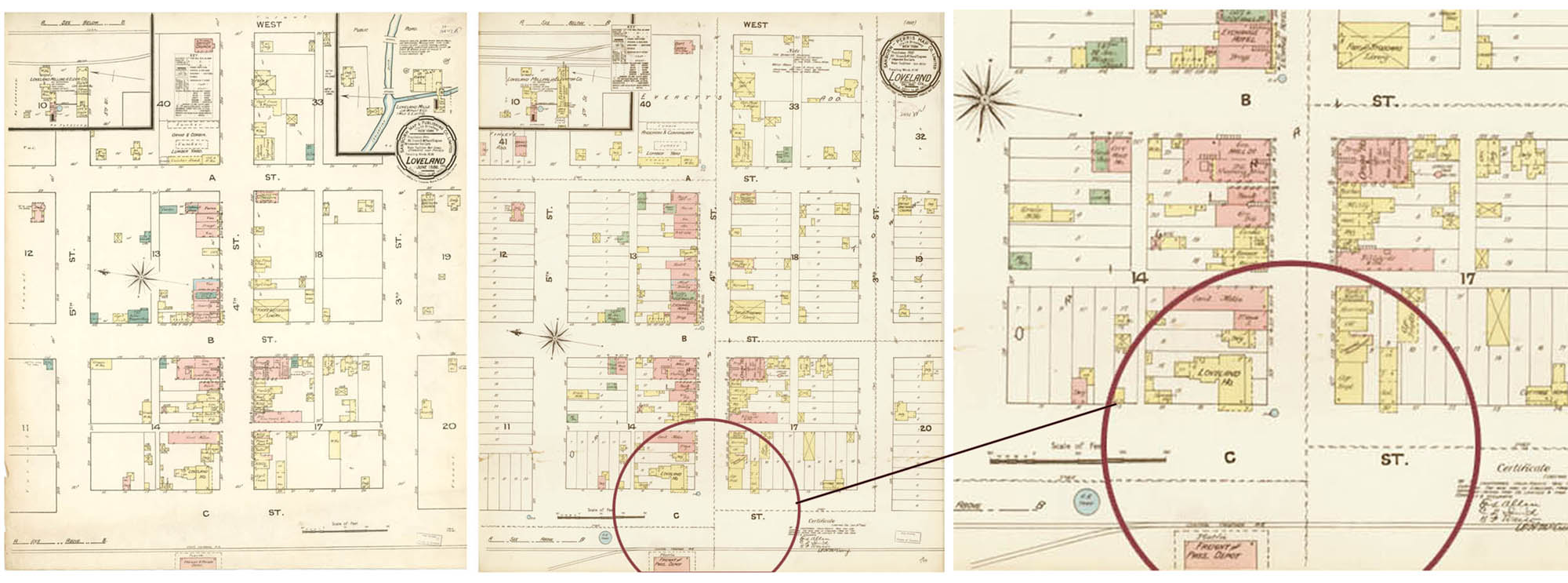 Caption: The 1924 waterline at the intersection of Railroad Avenue and 4th Street is predated by an even older waterline. In 1887, Loveland taxpayers voted to fund the construction of a six-inch waterline downtown with a $40,000 bond. Sanborn Insurance Maps from the era show downtown Loveland before (1886, left) and after (1890, right) the waterline installation, represented by dotted lines. The inset, right, outlined in red, highlights the Main Depot at the intersection.
A delicate operation
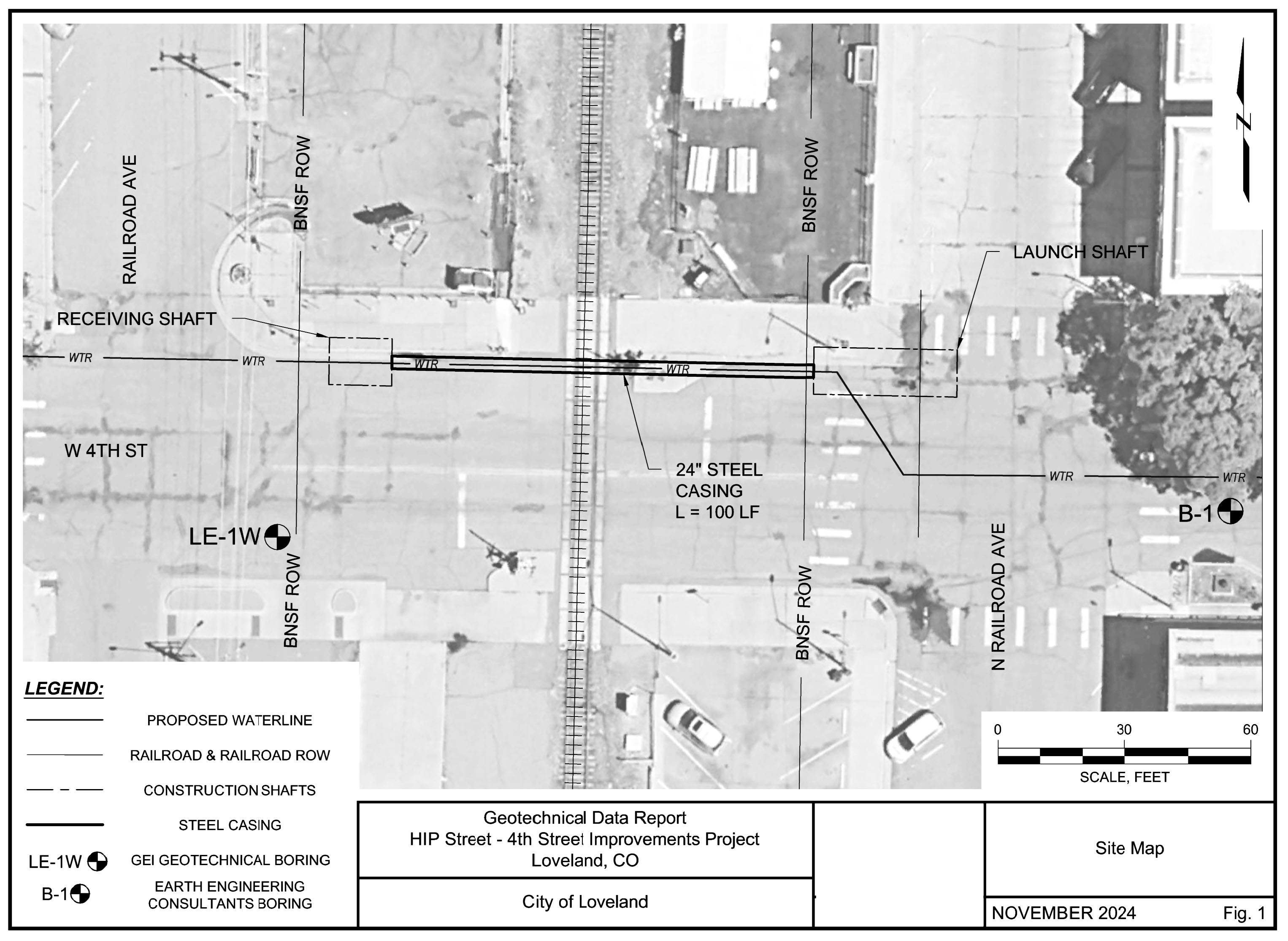 Caption: Construction map view shows aerial view of the location of the new waterline pipe relative to the railroad tracks at the intersection of Railroad and 4th, Loveland Colorado. Knowing what’s beneath the earth before construction starts is an important consideration.
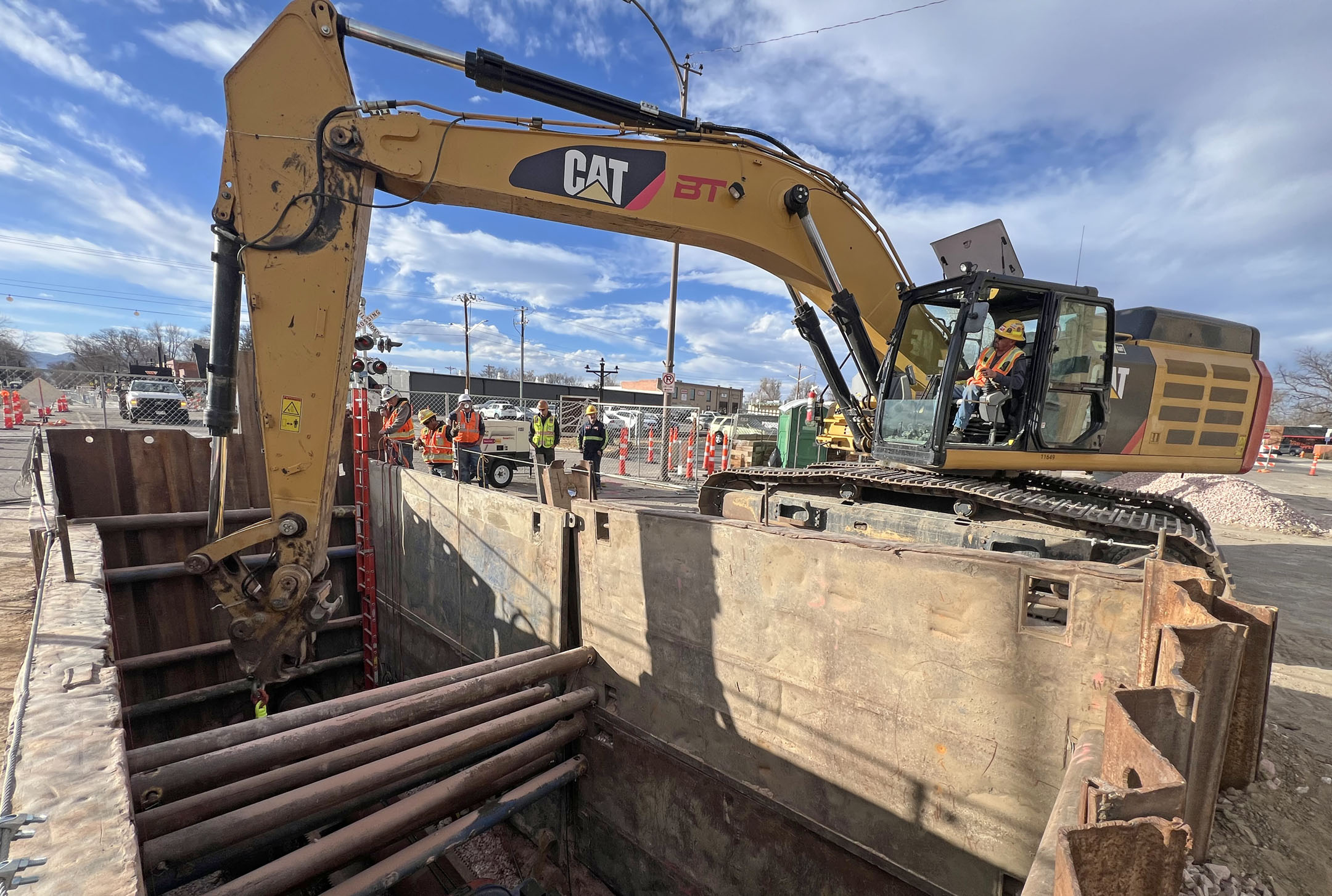 Caption: Underground excavation and bore on Railroad Avenue prepares for the installation of a new 12-inch water pipe in downtown Loveland, Colorado.